
Night vision and thermal imaging are two of the most popular technologies for seeing in low-light or no-light conditions,but they work in completely different ways. Night vision amplifies existing light (like moonlight or infrared illumination), while thermal imaging detects heat signatures regardless of lighting conditions. In this guide, we'll break down how each technology works, compare their strengths and limitations, and help you decide which one fits your specific use case.
What Is the Key Difference Between Thermal Imaging and Night Vision?

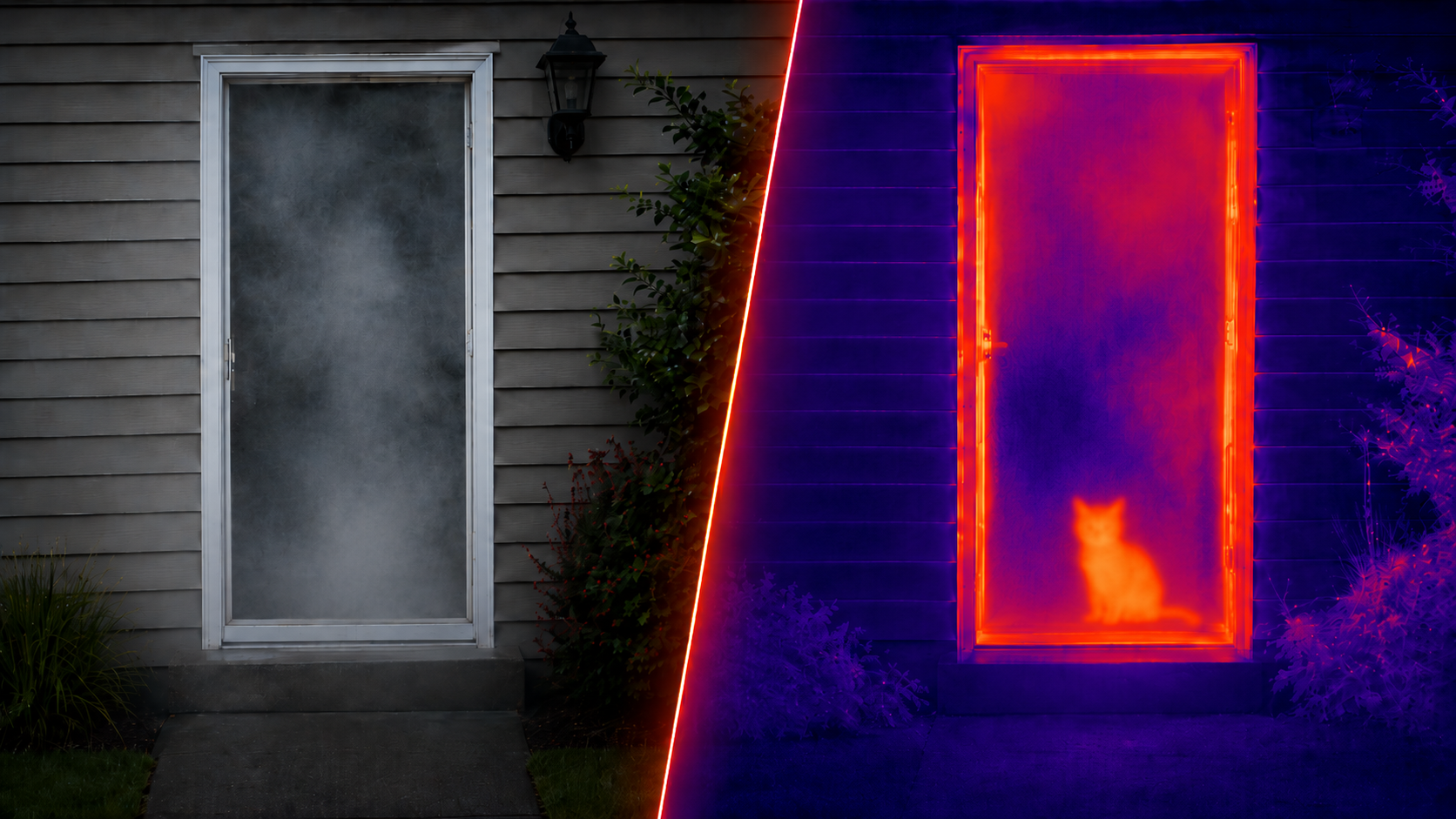
The main difference between thermal imaging and night vision lies in the wavelengths and energy forms each technology captures. Thermal imaging detects infrared heat radiation emitted by any object in the environment,including people, animals, and vehicles and converts it into a visible image. Night vision, on the other hand, works by amplifying existing ambient light, such as moonlight, starlight, or distant urban glow, along with near-infrared light, to produce a clear image.
Thermal imaging performs reliably in total darkness and light smoke or haze, since it doesn't depend on any existing light source,though heavy fog, rain, or snow can still reduce its detection range.
Night vision vs Thermal imaging
|
Feature
|
Night vision
|
Thermal Imaging
|
|
Detection
|
Detect reflected visible light and near-infrared light by objects
|
Detects infrared thermal radiation from objects and living beings, then converts it into a thermal image
|
|
Suitable environment
|
Need at least a little light and a shorter detection distance
|
Can work well in total darkness, fog and smoke
|
|
Image quality
|
Provide more natural and clearer images
|
Generate images showing the heat distribution
|
|
Representative device
|
Night vision device
|
Thermal camera
|
|
Price
|
Most consumer digital night vision devices cost around $200-$500.
|
Most consumer thermal cameras cost around $200-$1200.
|
|
Best for
|
Traditional outdoor observation: good weather conditions, with low light levels and at a relatively close distance
|
Industrial maintenance inspection: Professional-grade preventive inspection for industrial machinery issues
Home Inspection: Heat loss, water leaks, etc.
Outdoor observation: Reliable in darkness and light atmospheric interference
|
|
Biometric identification
|
Can show facial features, text, and other fine details
|
Can show facial heat patterns and is used in some facial recognition research, but detail and clarity are generally lower due to resolution limits and lack of texture data
|
How Does Thermal Imaging Work?
A thermal camera doesn't see light,it sees heat. Every object emits infrared radiation, whether it's dark, foggy, or pitch black outside, and that's what the camera actually captures. This radiation hits a detector array (typically an uncooled microbolometer grid), where each sensing element heats up slightly and changes its electrical resistance. The camera reads these tiny resistance changes across the array and maps them to pixels,warmer readings rendered in brighter tones, cooler ones in darker tones.
The result is an image that encodes temperature, not light. A wall with a hidden water leak or a circuit board with one overheating component can look identical to the naked eye, yet appear completely different under a thermal camera,because it's reading heat, not surface color or texture.

Why Thermal Imaging Works in Complete Darkness?
Every object above absolute zero radiates infrared energy constantly,it's basic physics, not something that switches on with daylight. A parked car, a wall, a person standing still: each is emitting heat right now, at noon or at 3 a.m. alike. That's the same detector array from before doing exactly what it was built to do,it was never reading reflected light in the first place, so there's nothing for darkness to take away.
Night vision works on the opposite premise. It has nothing to amplify when there's no light to start with, which is why its performance collapses in a windowless room or on a moonless night. Thermal imaging has no such floor: the radiation never stops, so the camera performs the same at noon, at midnight, or during a blackout.
What Affects Thermal Imaging Performance?
Thermal imaging can enable all-day detection. However, image quality and detection performance are seriously affected by:
Low thermal contrast
Thermal cameras rely on temperature differences to distinguish objects from their surroundings. When the target and the background reach almost similar temperatures, thermal contrast decreases, making objects more difficult to detect and reducing the visibility of fine details.
Physical barriers
Thermal cameras detect infrared radiation emitted from the surfaces of objects. As a result, solid materials such as walls, doors, and standard window glass block long-wave infrared radiation, preventing the camera from seeing objects behind them.
Adverse Weather Conditions
Heavy rain, dense fog and snowfall are packed with tiny water droplets that scatter and absorb infrared energy, reducing the camera’s maximum detection range.
Applications

Thermal cameras were once reserved for industrial-grade testing, but they've since found their way into homes. Today's consumer thermal cameras come in a range of forms, letting homeowners pick whichever suits their needs.
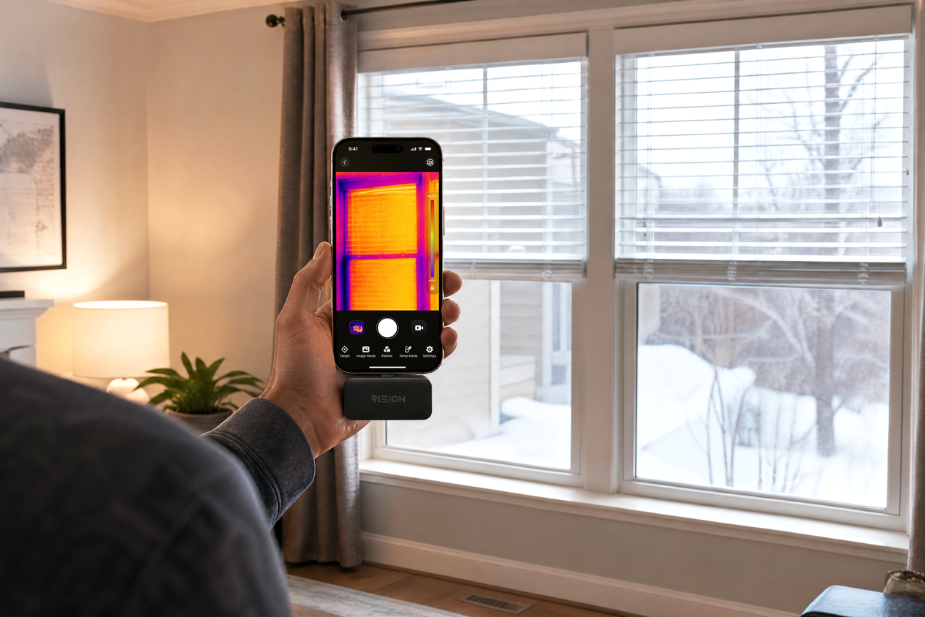
Home & building diagnostics Thermal cameras can spot heat loss, poor insulation, and hidden water leaks during home inspections. Scanning key areas helps homeowners catch energy waste and problems,like a failing pipe or a gap in the wall,before they turn into costly repairs.
Home electrical & appliance safety Thermal cameras can flag abnormal heat buildup in outlets, breaker panels, and appliances,often the earliest sign of a wiring fault or a part about to fail. Catching it on camera means catching it before it becomes a fire risk.
Security surveillance Thermal cameras support security monitoring in low-light or no-light conditions, and in light fog, smoke, or vegetation that can obscure a standard night-vision device. Around a property perimeter or in a dimly lit storage room, a shift in a heat signature is often easier to catch than a shape in the dark.
Outdoor adventures Thermal cameras suit a range of outdoor uses,search and rescue, hunting, wildlife watching. In a pitch-black forest, dense fog, or heavy brush, they cut straight through natural camouflage, helping users spot an animal or a missing person in seconds,something night vision alone often can't do.
How Does Night Vision Work?
Night vision technology amplifies ambient light, such as moonlight or starlight, to help the human eye see clearly in dark environments. The principle varies slightly by type: light is first collected by the objective lens, then either intensified by an image intensifier tube,which converts it to electrons, amplifies them, and converts them back into a visible glow on a phosphor screen or captured by a digital CMOS sensor and processed into an image shown on a digital display, depending on whether the device is analog or digital night vision.
How Night Vision Create Images?
Night vision creates images using two different core technologies,image intensification and digital sensing and either type may be paired with an active infrared illuminator when ambient light runs out.
Image intensification is the classic approach: it collects faint ambient light through the objective lens, feeds the photons into an image intensifier tube, which multiplies their number, and displays a bright, clear image,typically in the signature green tone on screen.
Digital night vision uses a highly sensitive CMOS sensor to capture light instead. When the environment is too dark for the sensor to work with ambient light alone, these devices often rely on an IR illuminator, which emits near-infrared light invisible to the human eye but functionally equivalent to a spotlight from the sensor's point of view.
What Affects Performance?
Night vision is capable when at least some ambient light exists, like the open ground under the moonlight. However, its performance drops sharply in:
Near-total darkness
In near-total darkness, there may not be enough photons for the device to amplify, so image brightness and detail drop significantly unless an infrared illuminator is used.
Complicated environment
In environments with dense fog or smoke, thick dust or heavy vegetation, light can be scattered or blocked randomly. This reduces the amount of usable light reaching the night vision sensor.
Extremely long detection range
The farther the target objective is, the less light reflected from it.
Bright light exposure
Night vision devices aren't very useful in very bright environment, because there is too much light for them to work with efficiency.
Applications
Traditional night adventure
When sufficient ambient light or an infrared illuminator is available, night vision performs well for hunting and wildlife observation. It allows users to distinguish body shape, movement, and surrounding terrain more naturally, helping them better understand the entire scene rather than focusing only on heat signatures.
Pros and Cons of Thermal Imaging vs Night Vision
|
Technology
|
Pros
|
Cons
|
|
Thermal Imaging
|
|
|
|
Night Vision
|
|
|
Types of Thermal Cameras Available
Based on product form, Thermal cameras currently come in the following types:
Smartphone Thermal Cameras
Smartphone thermal cameras are compact attachments that plug directly into an iOS or Android device, turning any smartphone into a portable thermal imaging camera. Popular among homeowners and DIYers, this category is commonly used for basic home inspections, quick repairs, and simple troubleshooting. Most models weigh under 50g, with native sensor resolutions between 160×120 and 320×240 pixels and thermal sensitivity claimed by the most officials around 35-50mK,enough to spot obvious heat leaks, moisture issues, or electrical hotspots. Priced around $200-$400, this pocket-sized format remains one of the most affordable ways to get started with thermal imaging.
Handheld Thermal Imaging Cameras
Handheld thermal imaging cameras feature a rugged, pistol-grip body designed for one-handed operation in demanding work environments. Widely used by professionals, this category is common in industrial maintenance, building inspections, electrical diagnostics, and HVAC troubleshooting, where abnormal heat patterns often reveal problems before they cause failure. Most models offer resolutions between 320×240 and 640×480 pixels, with thermal sensitivity around 30-50mK for sharper detail and more reliable diagnostics. Detection range typically extends to several hundred meters. While entry-level models now start at a few hundred dollars, most professional-grade handheld units are priced from $1,000 upward, reflecting the higher performance and durability this format is built for.
Thermal Monoculars
Thermal monoculars are compact, single-eyepiece devices built for outdoor use in low-light or no-light conditions. Popular among hunters, hikers, and rescue teams, this category is commonly used for wildlife observation, nighttime surveillance, and search-and-rescue operations, where detecting a heat signature at a distance matters more than fine image detail. Most models offer resolutions between 256×192 and 640×512 pixels, with detection ranges from a few hundred meters up to 1-3 kilometers depending on sensor quality and lens size. Pricing generally starts around $500 for entry-level units and can exceed $3,000 for higher-resolution, longer-range models.
Thermal Camera Recommendation for Homeowner Use
Choosing the Right Form Factor: Smartphone Attachment vs. Handheld
For Casual Users and Light DIYers If you only need to check for seasonal leaks, poor insulation, or gaps around windows, a smartphone thermal camera attachment is usually a more cost-effective choice. It connects to your iPhone or Android phone, so it is compact, easy to carry, and can use your phone’s screen and processing power.
For Serious DIYers and Self-Built Homeowners If you are renovating an old house, working on large DIY projects, or doing regular maintenance, a rugged handheld thermal camera is a better fit. It offers stronger drop protection, a dedicated battery, and avoids draining your phone during long inspections.
RISION Magic: The Ultimate Homeowner Pocket Thermal Camera
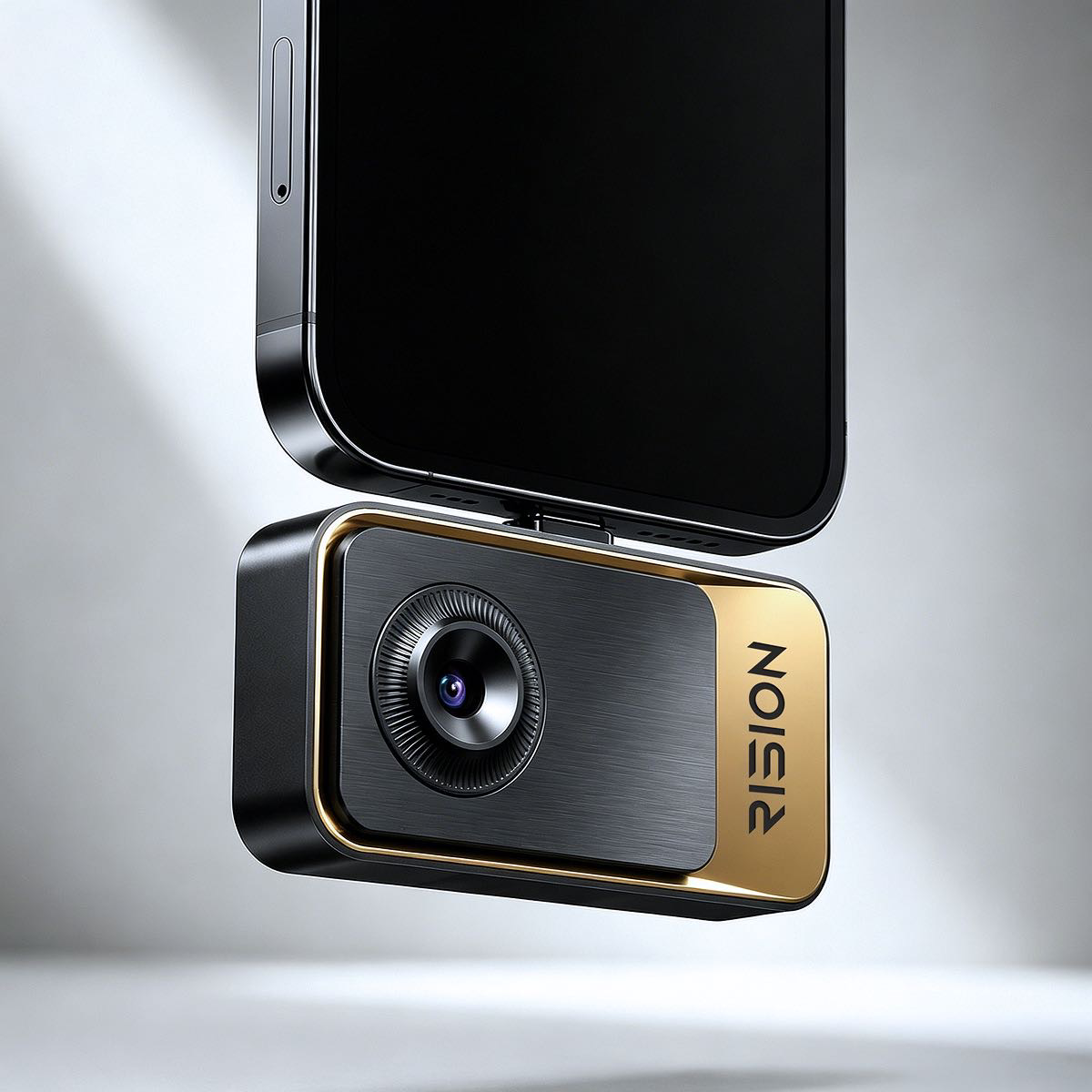
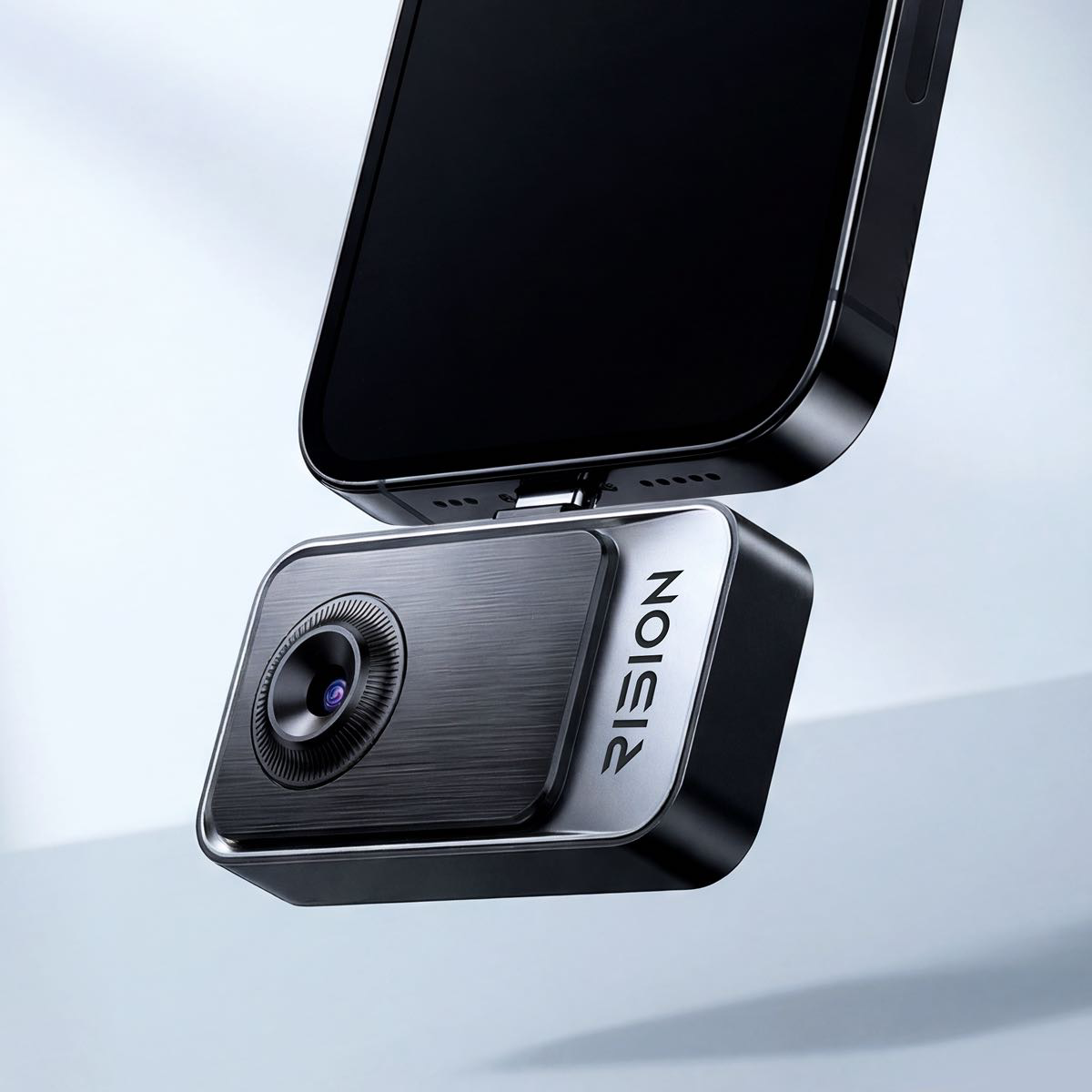
For homeowners looking for a smartphone thermal camera that balances professional-grade performance , the RISION Magic is a strong contender. This compact plug-in device turns any iOS or Android phone into a capable thermal imaging tool,simple enough for everyday use, yet powerful enough for serious home diagnostics.

RISION Magic Thermal Camera
$125 $139
- 160 × 120 IR Resolution with Super Resolution up to 320 × 240
- AI Dual-Light Fusion for aligned thermal and visible images
- -4°F to 1112°F temperature range with ±2% accuracy
- USB-C compatible with Android, iOS, and PC
Use Code: RISION10
Beyond core thermal imaging, the Magic is built to handle the everyday problems.
Finding Hidden Water Leaks and Insulation Gaps Damp patches, mold, or a sudden spike in your energy bill often point to a leak or insulation gap hiding behind walls or ceilings,but pinpointing the exact spot without cutting into drywall is hard. With 320×240 super-resolution output powered by proprietary image enhancement, the Magic shows sharp, detailed thermal patterns instead of vague color blobs, making it much easier to trace the source before calling in a contractor.
Diagnosing Overheating Appliances or Wiring An outlet that feels warm, a breaker that keeps tripping, or an appliance that runs hotter than it should can all signal an early electrical fault. The Magic's wide detection range from -4°F to 1112°F (-20°C to 600°C) with ±2°C or 2% accuracy,lets you check anything from a wall outlet to an HVAC unit or engine component with the same device.
Locating the Exact Fault, Not Just a Warm Spot A common frustration with basic thermal cameras is seeing a warm area on screen but having no idea what's actually causing it—is it a pipe, a stud, or a wire behind the wall? RISION's exclusive "AI Single-Lens Dual-Light Fusion" technology overlays real structural outlines onto the thermal image, so you can see exactly what object is generating the heat and pinpoint the fault immediately, without guesswork.
Using One Device Across Multiple Setups Whether you're on an iPhone, Android phone, or Windows laptop, the Magic works across all three, backed by free PC software and dual-app mobile support,so you're not locked into a single device or forced to buy separate tools for different tasks.
Looking for More Power? For power users needing a more rugged setup, stay tuned. We will soon be expanding the ecosystem with the upgraded RISION Magic Pro and a dedicated standalone handheld lineup. Subscribe to our brand newsletter today to catch the official launch announcements and lock in exclusive early-bird discounts!
Conclusion
Although thermal imaging and night vision are both designed to improve visibility in low-light environments, they serve different purposes. Night vision is ideal for preserving natural scene details and recognizing people or objects in low-light conditions, while thermal imaging excels at detecting heat signatures regardless of visible light.
Today, the value of thermal cameras extends far beyond nighttime observation. In addition to outdoor activities such as hunting, wildlife observation, and security, thermal imaging is widely used for home inspections, electrical troubleshooting, building maintenance, and industrial diagnostics. As the technology has become more affordable, thermal cameras are now available in a variety of formats, including handheld devices, smartphone attachments, and professional inspection tools, making them accessible for both everyday users and industry professionals.
FAQs
Q1: Why are thermal imaging cameras more expensive?
Because they use advanced infrared sensors, microbolometers, and precision calibration systems to detect minute temperature differences. The manufacturing processes for these components are complex, and the materials used must function properly under extreme conditions. The final product is capable of all-weather, long-range detection and 24-hour continuous operation, so the higher price is justified.
Q2:Which one lasts longer?
Both technologies are durable, but thermal imaging devices tend to have a longer service life because they use solid-state sensors and have fewer moving parts. Night vision tubes degrade over time, especially when exposed to bright light.

Leave a comment
This site is protected by hCaptcha and the hCaptcha Privacy Policy and Terms of Service apply.